Lembeh Photo Subjects
“What subjects are we going to shoot there?” This is one of the most common questions we receive before a trip to NAD Lembeh Resort. This is not as easy of a question as you may think. Therefore, we thought we would write a little something to discuss different Lembeh photo subjects that most everyone will see. There are many factors that can influence what animals are seen including temperature, time of year and rain volume. Some creatures are seasonal in the strait while others are common year round. Another influence on critter sightings is the topography of the dive site. Lembeh boasts many different environments such as black sand, white sand, rubble, and coral dives. There are also a few walls and seamounts that are regularly visited.
With such a variety of environments, it means there are hundreds of species to encounter. These range from fish to invertebrates as well as favourites such as nudibranchs and octopus. Although we know the general common photo subjects that are always there, we can’t say 100% if you will find all the famous Lembeh inhabitants. Many visitors come to Lembeh armed with a “critter list” but it’s important to remember that nature doesn’t always provide. Although the guides always do their best, sometimes it’s not the ideal time of year for a certain subject. Keep in mind, if you didn’t find all the critters you were after, it’s a great opportunity for an excuse to visit again!
What Subjects Are Found Year Round?
Certain photo subjects however are pretty much guaranteed year round. Here we list some of the most consistent and interesting critters that you may encounter in the Lembeh Strait no matter what time of year you visit.
Lemon Goby
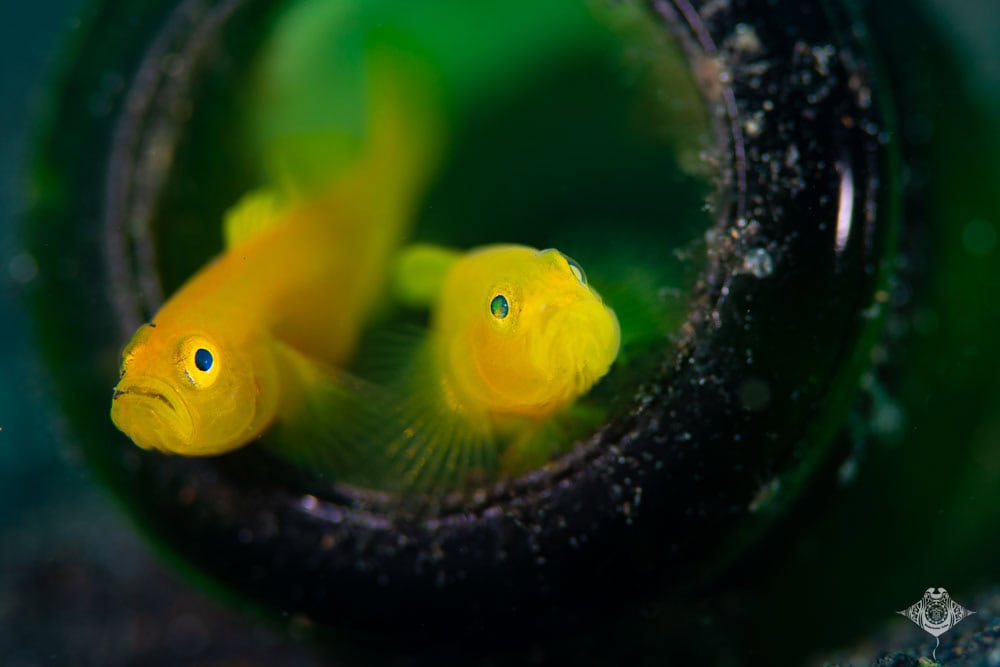
The lemon goby is always a favourite among photographers. These charismatic little fish are often found living in discarded bottles or other items such as wood or coconut shells. They are usually found in pairs and often with a batch of eggs they zealously guard. Their bright colour and humorous antics are always a delight to encounter.
Nudibranch with Hitchhiker Shrimp
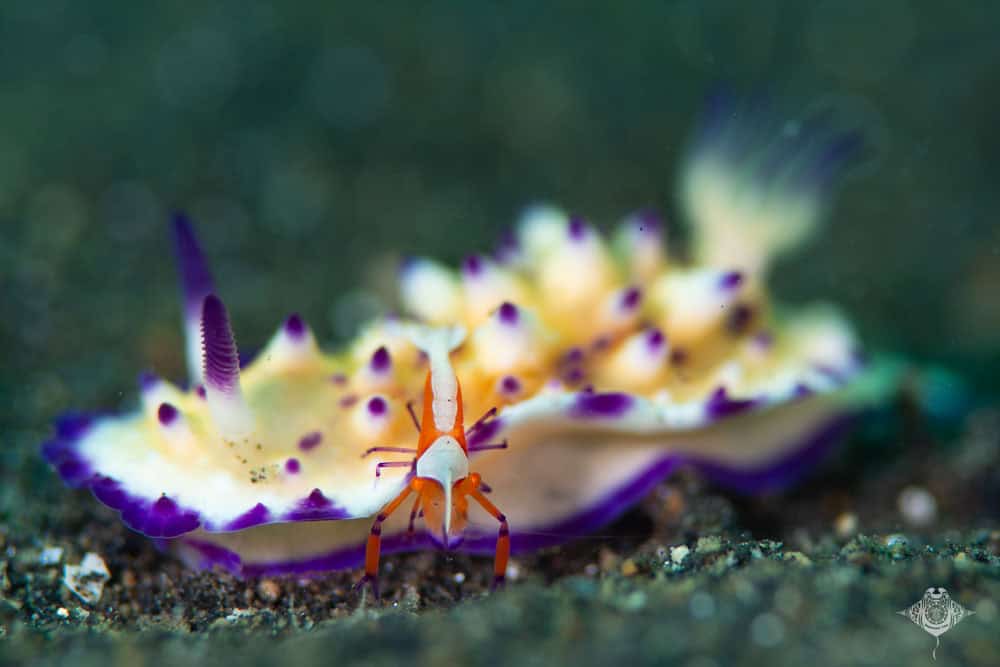
The hitchhiking emperor shrimp can be found on several subjects including sea stars and cucumbers. However, the favourite subject for photographers are when they are found on nudibranchs (several species of nudibranchs can be home to shrimp). They form a commensal relationship that tends to be benefit the shrimp more than the nudibranch. The shrimp gets a free ride and access to a larger area to feed. The movements and feeding habits of the nudibranch stir up detritus that the shrimp feeds on. The shrimp also gains a place to hide as it can tuck itself in the folds or under the slug when predators are near. The nudibranch doesn’t gain much from this relationship other than a fleeting sense of fame as it becomes a more attractive photo subject!
Long Arm Octopus
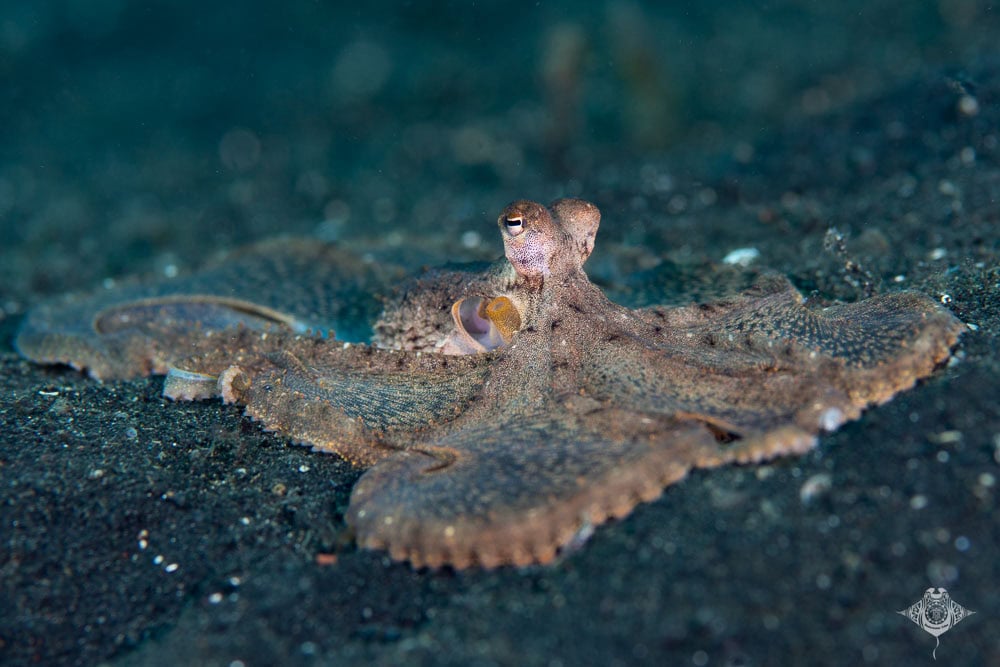
Although this photo is of the “Long arm or White V octopus” there are three long arm species (if not more) that can be found: the mimic, the white v and the wonderpus. Although all three can be found on a single trip to Lembeh, this isn’t always guaranteed. The white v and the mimic prefer black sandy sites such as TK and Aer Bajo. The wonderpus on the other hand is more often found in rubble environments and sites such as Pantai Parigi and Nudi Falls.
Finding Nemo
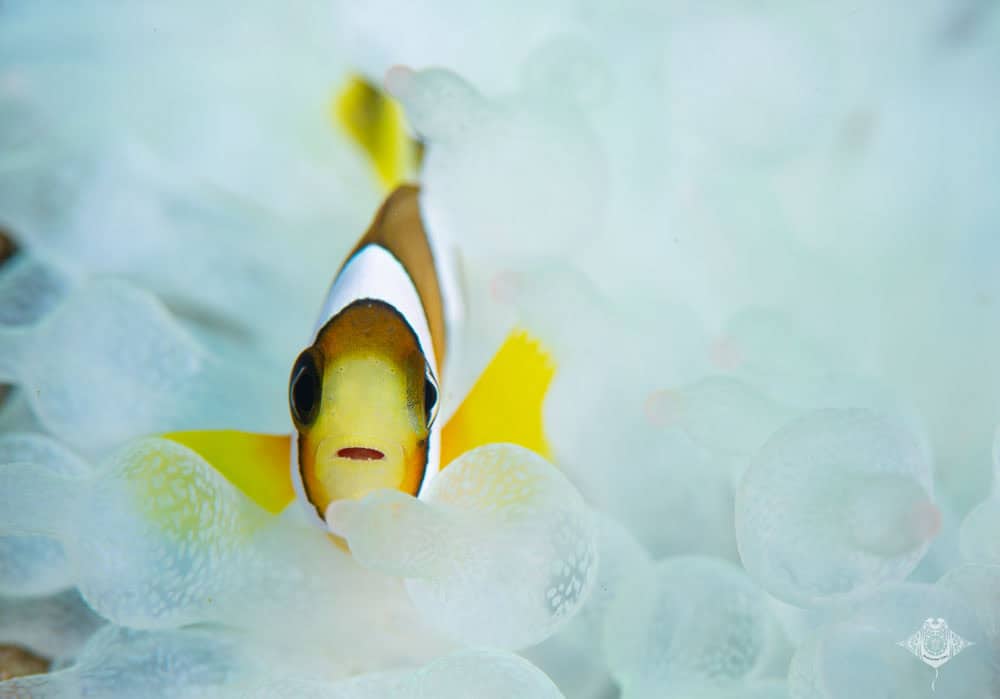
Of course in the Indo-Pacific region anemones and their clownfish are common including in Lembeh. Although many people may pass over the clownfish in the pursuit of more “exotic” subjects, this can be a mistake. These brightly coloured fish are a great subject to shoot when trying to improve skills or work on a new technique. There are more than ten species of clownfish in Indonesia and most are found in Lembeh. What’s even better, is the vast number of colours that their host anemones can boast. Just because you may have shot these fish before doesn’t mean you can’t shoot them again and again!
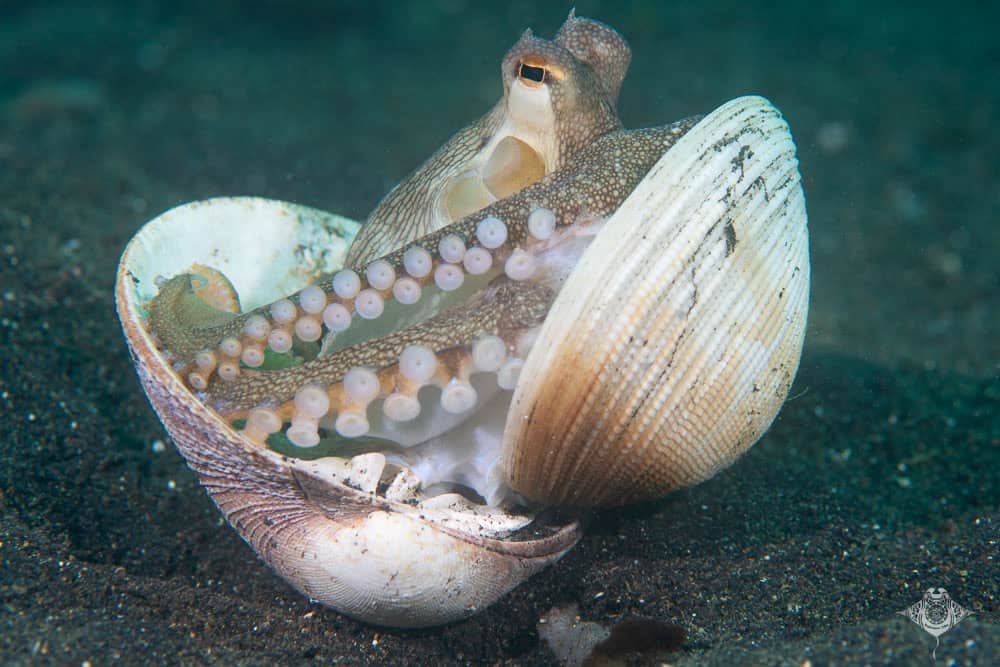
The Coconut Octopus – Most Sought After Lembeh Photo Subject?
With the recent popularity of several highly commended nature documentaries, the coconut octopus has become a very sought after creature. Their intelligence and innate boldness make them a worthy subject. Not only are they interesting to photographers, coconut octopus are one of the most interesting octopi of all. When they make a home from a shell or coconut and a second octopus appears its game on. Watching two of these fist sized cephalopods tussle over a shell is the highlight of any dive. Videographers and photographers alike will gladly spend hours watching these wonderful creatures.
The Frogfish
The frogfish is atop many a divers wish list. They come in a variety of sizes and shapes, from as small as pea as large as a soccerball. Although they don’t move a lot, their sheer ugliness and cryptic nature makes them a favourite of photographers. It’s not just the photo itself, it’s the thrill of finding such a difficult to find fish. The variety of different species is also a big attraction as each one looks much different than the others. The biggest bucket list frogfish is the “hairy” frog and it’s always exciting when one of these is found. Although the “hairy” is not that common, there are always a number of different species present around the strait that photographers will love. I believe everyone who visits Lembeh will encounter at least one froggie during their dives.
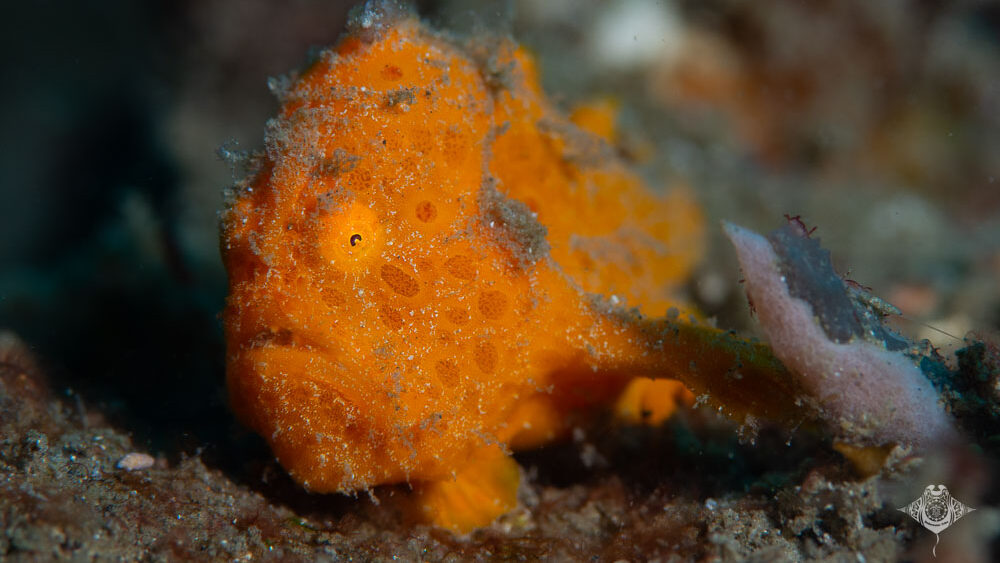
We visit Lembeh often, including our annual photo fun week every July/August. Over the years, we have learned which Lembeh photo subjects are most common as well as most sought after by photographers. This above list of critters is only the tip of the iceberg of what you will find in Lembeh. However, we are pretty confident to state that you will encounter all of these on a normal week during any time of year. In fact, all of these photos were shot during our July 2025 photo week a few months ago! If you are interested in encountering and photographing these subjects, then please peruse our 2026 Photo Workshop page for more information.